Why Healthcare Organisations Struggle With Workforce Compliance
Blog
Healthcare organisations often struggle with workforce compliance due to fragmented systems, manual tracking, and growing regulatory obligations.
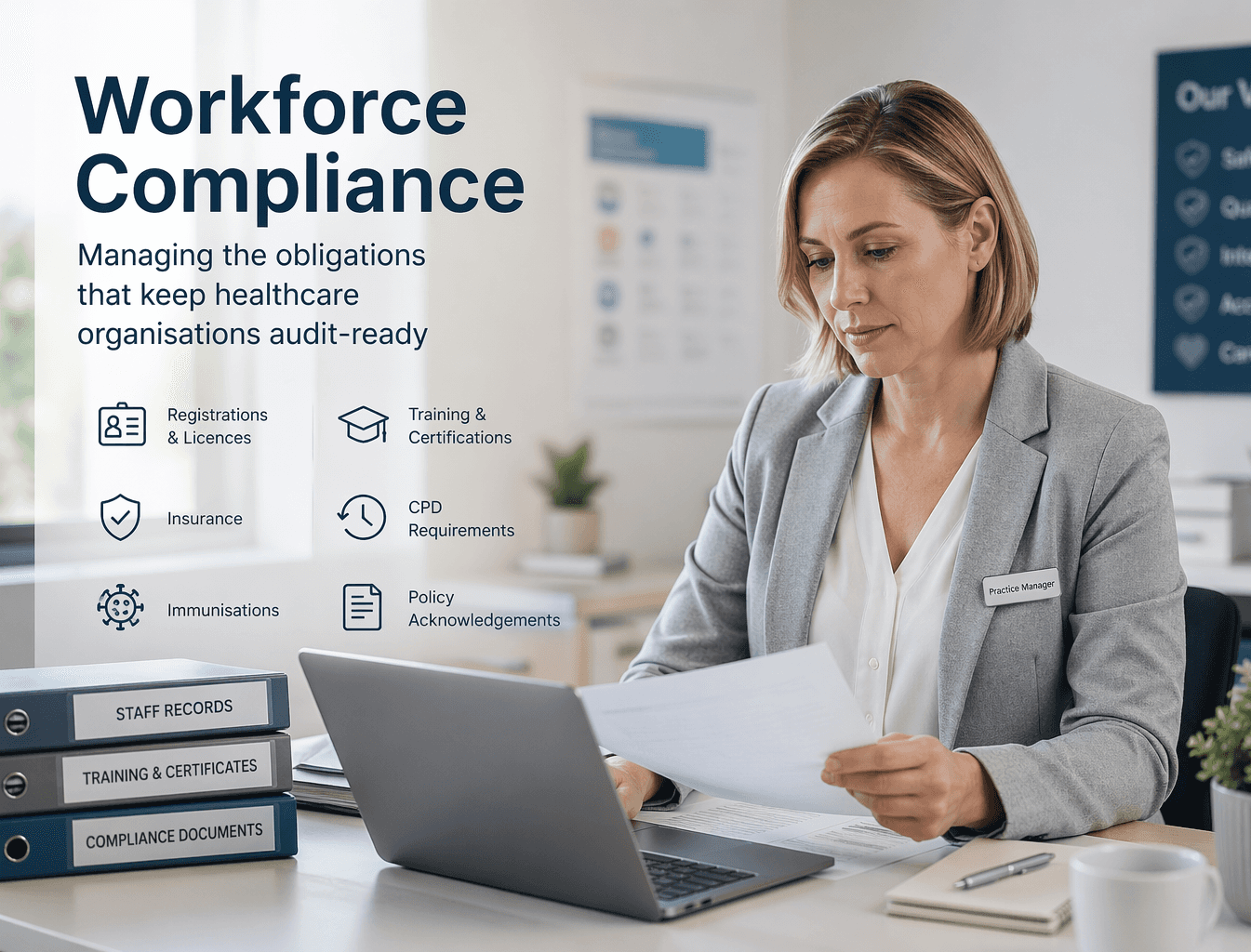
Work in a healthcare organisation long enough and a familiar pattern begins to emerge.
Everyone understands that compliance matters. Staff credentials must be current. Training must be completed. Policies must be acknowledged. Documentation must be available when regulators ask for it.
Yet despite the best intentions, many organisations find themselves constantly trying to catch up.
Not because they do not care about compliance, but because managing workforce obligations in healthcare is inherently complex.
The Reality of Workforce Obligations
Healthcare professionals often carry multiple regulatory responsibilities at the same time.
These may include:
professional registrations
continuing professional development (CPD) requirements
certifications and mandatory training
immunisation records
insurance documentation
regulatory licences
Individually, these obligations are manageable. Collectively, across a workforce of dozens or hundreds of clinicians and staff, they can become stressful and difficult to manage.
What begins as a simple tracking exercise quickly becomes a broader operational challenge.
The Hidden Problem: Fragmentation
One of the biggest issues is not the obligations themselves, but how the information is recorded and managed.
Compliance records often sit across multiple places, including:
spreadsheets
HR systems
training platforms
shared document folders
email threads
Each system holds part of the story, but none shows the full picture.
As a result, compliance teams often lack a clear, real-time view of workforce obligations across the organisation.
And when visibility is limited, risk increases.
The Administrative Burden on Healthcare Teams
The people responsible for keeping compliance on track are usually already busy staff members, not dedicated administrators.
They are practice managers, facility managers, clinical leads, or compliance coordinators — people already managing operational responsibilities tied to patient care and service delivery.
Much of their time is spent chasing documents, checking expiry dates, or verifying certifications.
These activities are important, but they are also highly administrative.
When systems are fragmented, the work becomes reactive rather than proactive.
When Deadlines Slip
Manual tracking systems rely heavily on human oversight.
A spreadsheet reminder is missed.
An email is buried in a busy inbox.
A certification renewal is delayed.
Small gaps like these can accumulate quickly.
And when an audit approaches, organisations often find themselves scrambling to locate evidence that should have been easily accessible.
The stress that follows is familiar to many healthcare leaders.
Moving Toward Structured Compliance
The organisations that manage workforce compliance most effectively tend to take a different approach.
Rather than relying on scattered systems, they focus on creating structure and visibility.
This often includes:
centralised compliance records
automated alerts for expiring credentials
clear ownership of compliance tasks
connected documentation and evidence trails
When workforce obligations are visible and organised, compliance shifts from being a constant administrative burden to a manageable operational process.
A Final Thought
Workforce compliance is often seen as paperwork.
In reality, it is a core part of healthcare governance.
Making sure staff are properly credentialed, trained, and compliant supports safety, accountability, and trust across the organisation.
Healthcare organisations are committed to meeting these obligations. The challenge is that the systems used to manage them are often fragmented, manual, and difficult to maintain.
A more structured approach can make this much easier. When records are centralised, responsibilities are clearer, and reminders are automated, compliance becomes more manageable and less reactive.
This is the problem Compli is designed to solve. It helps healthcare organisations bring workforce compliance into one place, reduce administrative effort, and maintain clearer visibility over obligations and evidence.